State Immunization Registries Infographic - SSG, LLC

State immunization registries are digital databases that consolidate vaccination records for individuals within a state or jurisdiction. By collecting disparate records from clinics, pharmacies, and hospitals into a centralized platform, these registries help healthcare providers and public health agencies improve vaccine tracking, reporting, and immunization program management.
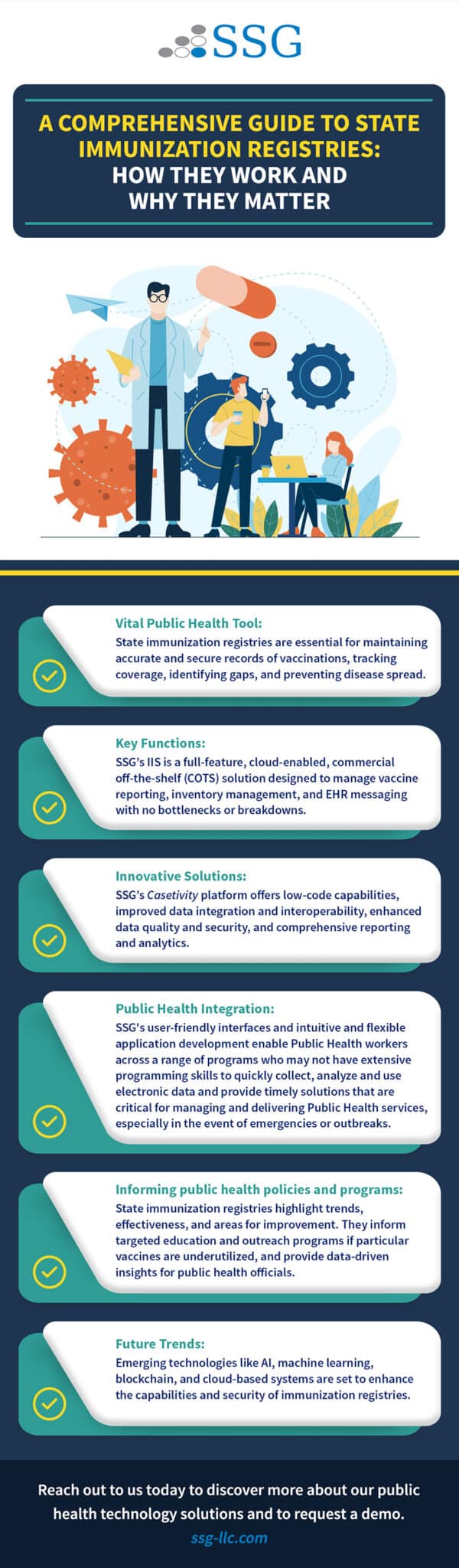
Key Takeaways
- State immunization registries support accurate vaccine records, coverage tracking, and identification of immunization gaps across populations.
- Modern registry systems improve reporting, inventory management, interoperability, and data quality across public health programs.
- Emerging technologies and improved data integration are shaping how immunization registries support public health decision-making and planning.
A Comprehensive Guide to State Immunization Registries: How They Work and Why They Matter
Key Functions
- Centralized Recordkeeping: SSG’s IIS consolidates vaccination data from multiple providers into one secure database.
- Clinical Decision Support: Providers can quickly check which vaccines a patient has received and which are due.
- Public Health Surveillance: Aggregated data helps track coverage rates, identify gaps, and monitor outbreaks.
- Resource Allocation: Data guides efficient distribution of vaccines and staff to areas of greatest need.
SSG IIS Capabilities
- Integration with EHRs: Seamless data exchange reduces duplicate entry and ensures complete patient histories.
- Inventory Management: Tracks vaccine stock levels, usage, and wastage to improve supply chain efficiency.
- Automated Alerts: Notifies providers when patients are overdue for vaccines or boosters.
- Reporting Tools: Generates compliance reports for schools, travel, and public health programs.
Public Health Integration
- Supports National Programs: SSG’s IIS align with CDC and state-level immunization initiatives.
- Community Outreach: Identifies underserved populations and informs targeted campaigns.
- Policy Compliance: Ensures departments meet reporting requirements and maintain accurate records.
- Emergency Response: Enables rapid mobilization during outbreaks or mass vaccination events.
Future Trends
- Advanced Analytics: SSG’s IIS features predictive modeling to anticipate coverage gaps and optimize interventions.
- Mobile Access: Expanding patient and provider access through secure mobile applications.
- Interoperability: Greater connectivity across states and health systems for nationwide visibility.
As part of the broader public health technology ecosystem, state immunization registries help improve data sharing, strengthen vaccination programs, and support more informed public health decision-making.
FAQs
- What are state immunization registries used for?
State immunization registries are used to collect, maintain, and manage vaccination records for individuals within a jurisdiction. They help healthcare providers and public health agencies track immunization histories, improve record accuracy, and support vaccination programs.
- How do immunization registries support vaccine reporting?
Immunization registries support vaccine reporting by consolidating vaccination data from participating providers into a centralized system. This improves data accuracy, reduces duplicate records, and gives public health agencies better visibility into immunization coverage and reporting trends.
- Why are immunization registries important for public health?
Immunization registries are important because they help ensure accurate vaccination records, improve access to immunization data, and support population health initiatives, effectively providing the data-driven foundation required to combat vaccine-preventable diseases at a population level.
During localized outbreaks or broader pandemics, immunization registries provide public health leaders with vital information to coordinate targeted interventions and deploy critical resources more efficiently.