Immunization Tracking Infographic: Transform Vaccine Management - SSG, LLC

An immunization information system (IIS) is a confidential, population-based digital platform that collects, manages, and consolidates vaccination records across healthcare providers and public health organizations. By centralizing immunization data, public health agencies gain better visibility into immunization coverage and community health trends. This helps them make more informed decisions to drive public health outcomes
Key Takeaways
- Immunization information systems play a central role in managing vaccine data by improving the accuracy, accessibility, and completeness of immunization records across populations.
- Automated vaccine tracking and reporting reduce administrative burden while enabling public health teams to monitor coverage, identify gaps, and respond more effectively to immunization needs.
- Integrated IIS platforms that connect with EHRs and analytics tools provide greater visibility into vaccine programs, supporting more efficient planning and improved public health outcomes.
Revolutionizing Immunization Tracking and Management through SSG’s IIS Software
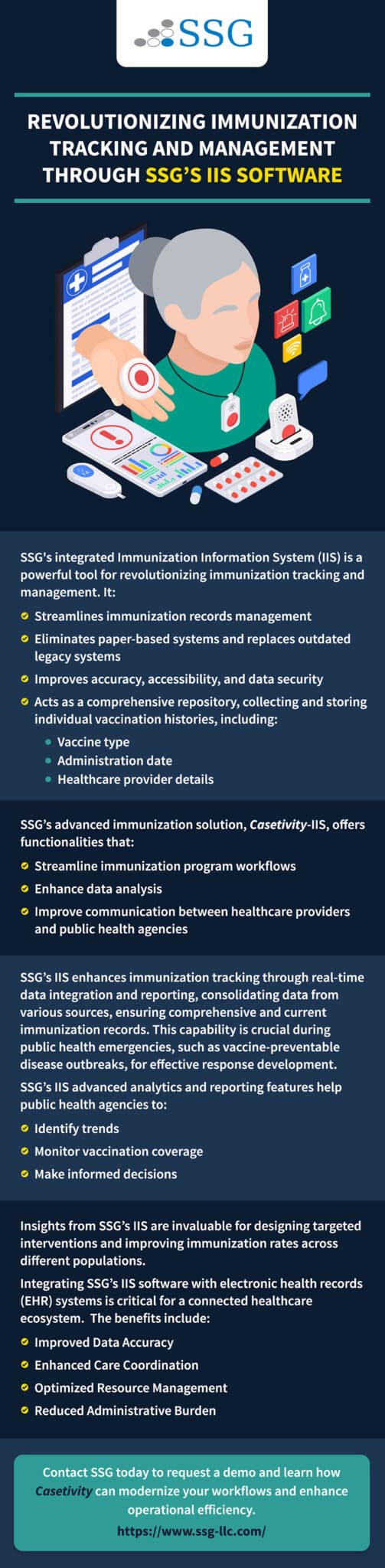
SSG’s integrated Immunization Information System (IIS) is a powerful tool for revolutionizing immunization tracking and management. It:
- Streamlines immunization records management
- Eliminates paper-based systems and replaces outdated legacy systems
- Improves accuracy, accessibility, and data security
- Acts as a comprehensive repository, collecting and storing individual vaccination histories, including:
- Vaccine type
- Administration date
- Healthcare provider details
SSG’s advanced immunization solution, Casetivity-IIS, offers functionalities that:
- Streamline immunization program workflows
- Enhance data analysis
- Improve communication between healthcare providers and public health agencies
SSG’s IIS enhances immunization tracking through real-time data integration and reporting, consolidating data from various sources, ensuring comprehensive and current immunization records. This capability is crucial during public health emergencies, such as vaccine-preventable disease outbreaks, for effective response development.
SSG’s IIS advanced analytics and reporting features help public health agencies to:
- Identify trends
- Monitor vaccination coverage
- Make informed decisions
Insights from SSG’s IIS are invaluable for designing targeted interventions and improving immunization rates across different populations.
Integrating SSG’s IIS software with electronic health records (EHR) systems is critical for a connected healthcare ecosystem. The benefits include:
- Improved Data Accuracy
- Enhanced Care Coordination
- Optimized Resource Management
- Reduced Administrative Burden
Contact SSG today to request a demo and learn how Casetivity can modernize your workflows and enhance operational efficiency.
FAQs
- What is an immunization information system?
An immunization information system (IIS) is a centralized platform for collecting, managing, and sharing vaccination data among healthcare providers and public health agencies. These systems help maintain accurate immunization records and improve visibility into vaccination coverage within communities. IIS platforms also support reporting, compliance, and public health coordination efforts.
- How does IIS software improve vaccine management?
IIS software improves vaccine management by helping organizations track immunization records, reduce duplicate data entry, and maintain more accurate patient information. It also supports reporting workflows, inventory visibility, and communication between healthcare providers and public health agencies. Improved access to vaccination data helps organizations operate more efficiently and respond more effectively to public health needs.
- Can an immunization information system integrate with EHRs?
Modern immunization information systems can integrate with electronic health records (EHRs) to streamline data exchange and reduce manual entry. This integration reduces administrative burden, improves data accuracy at the point of care, and supports coordinated care management across the healthcare ecosystem.